Key Takeaways
- Not all soups are equal. Some are light and watery, others are warming and filling.
- Check protein, fibre, carbohydrates and serving size to find a soup that keeps you satisfied.
- Decide whether you’re having a snack, a protein-rich soup or a formulated meal replacement.
There’s something about a warm cup of soup that just hits the spot. It’s cosy, it’s savoury, and it’s a welcome break from sweet snacks.
But many soups leave you hungry an hour later. If you’ve ever had a cup-a-soup at 3 pm and found yourself raiding the biscuit tin by 4, you know exactly what we mean. High protein soups might be the answer you need.
Why Protein (and Fibre) Make a Soup Filling
Protein and fibre are two things that help you feel full. Protein takes longer to digest, and fibre adds bulk and slows things down. Together, they help turn a light cup of soup into something that actually tides you over.
Many traditional packet soups are mostly water, salt, and a bit of starch. Tasty, sure, but not very satisfying. If you want something more filling, opt for a high protein soup.
What to Check on the Nutrition Label
Here’s a quick checklist to help you compare soups.
- Protein: Many packet soups have just a few grams. A high protein soup can have 15 grams or more per serve.
- Fibre: Look for at least a few grams. More fibre generally means more staying power.
- Carbohydrates: If you’re watching your carbs, check the total carbohydrate line. Some soups are thickened with flour or starch, which adds carbs without much else.
- Serving size: Make sure you’re comparing the same amount. A “serve” on one pack can be half the size of another.
- Sodium: Soups can be salty. Check the salt levels if you’re watching your intake.
Meet Lupins: The Secret to a Seriously Filling Soup
If you haven’t heard of lupins, you’re in for a treat. Lupins are a legume from the same family as chickpeas, and they’re naturally high in protein and fibre. Australia is actually one of the world’s biggest lupin growers. (Read more in The Best Superfood You Have Never Heard Of: Lupins.)
That’s why we created Formulite Lupin Soups. This is what one 38 g sachet of the Chicken flavour gives you:
| Per serve | Formulite Lupin Soup, Chicken |
|---|---|
| Protein | 22 g |
| Fibre | 7 g |
| Carbohydrates | 2.2 g (1.0 g sugars) |
| Energy | 433 kJ (105 Cal) |
| Sodium | 450 mg |
| Extras | Added hydrolysed collagen, added vitamins and minerals, gluten- and dairy-free |
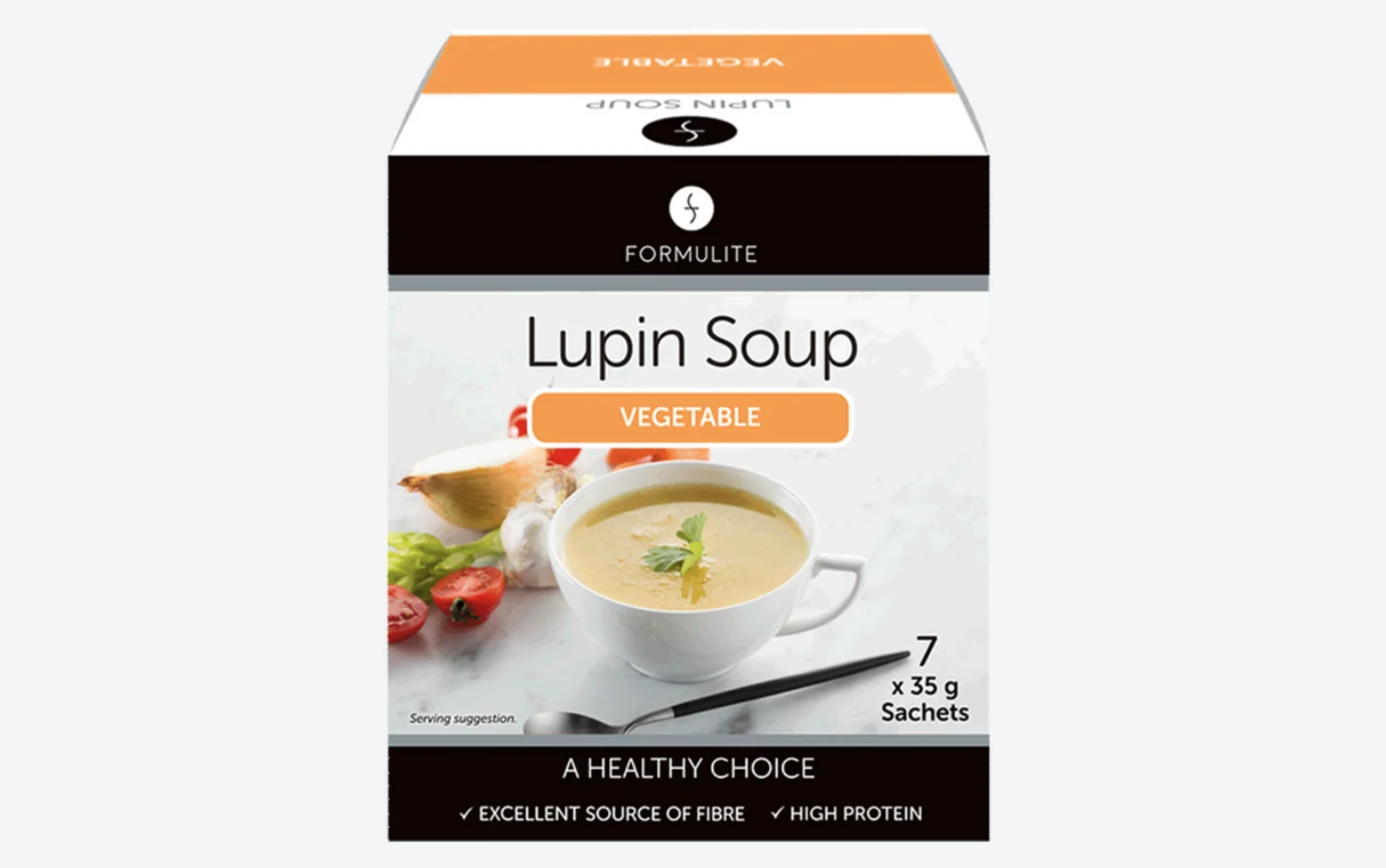
The Beef flavour is similar, and the Vegetable flavour has 12 g of protein per serve. A box of 7 sachets is $28.95, which works out at about $4.14 a serve. If you want to try all three, there’s a Lupin Soup Trial Pack for $14.95.
Preparing the soup is simple: empty a sachet into a mug, add 250 ml of hot water and stir for 30 seconds. The lupin flakes settle at the bottom, so grab a spoon and scoop them up.
Easy Ways to Enjoy a High Protein Soup
A few of our favourite ideas:
- The 3 pm rescue: Keep a few sachets in your desk drawer for that afternoon slump.
- Bulk it up with veggies: Stir through some baby spinach, frozen peas or leftover roast veg for extra colour and fibre.
- Pair it with a salad: Soup plus a big side salad makes a light, balanced lunch.
- Warm up after a walk: Perfect on a chilly morning or evening.
- Travel buddy: Sachets are light and only need hot water, so they’re great for work trips and caravan holidays.
Need Something Warm, Filling, and High in Protein?
A good high protein soup is a whole lot more satisfying than your average cup-a-soup. Check the protein, fibre and carbs, know whether you’re having a snack or a meal, and keep a few on hand for when the cravings hit.
Check out Formulite’s range of High Protein Lupin Soups.
This article is general information only and isn’t a substitute for personalised advice. Talk to your healthcare professional before making big changes to your diet.