Key Takeaways
- Decide first whether you want a snack bar or a meal replacement bar. They do different jobs.
- Check protein, fibre, energy, sugar, serving size and allergens.
- Always compare per serve, and check the bar weight. Not all bars are the same size.
Protein bars are everywhere these days. The supermarket, the servo, the checkout at the chemist. And they all look pretty healthy, right?
Well, not always. Some are genuinely nourishing. Others are basically a chocolate bar with a gym membership. The good news is you don’t need a nutrition degree to tell the difference. You just need to know where to look.
Snack Bar or Meal Replacement Bar?
Neither is better. They just do different jobs. Before you start comparing, ask yourself one question: what do I want this bar to do?
A protein snack bar tides you over between meals. It’s usually smaller and lighter, with a protein boost.
A meal replacement bar stands in for a meal. It’s usually a bit bigger, and it should provide more of the nutrition a meal would, like fibre plus a good spread of vitamins and minerals.
Your Protein Bar Label Checklist
Screenshot this for your next shopping trip.
- Protein: Snack bars often have around 10 to 15 grams. A meal replacement bar should have more, often around 20 grams.
- Fibre: Fibre helps you feel full and keeps things moving. A few grams per bar is a good sign.
- Energy (kilojoules): A meal replacement bar will be higher than a snack bar because it’s doing the job of a meal.
- Sugar: Look at the “sugars” line. Some sugar is normal, but it shouldn’t be the main ingredient.
- Sugar alcohols: Names like sorbitol, maltitol or glycerol help keep sugar levels down, but large amounts can upset sensitive tummies and cause a laxative effect.
- Serving size: Bars range from about 30 to 70 grams. Compare per bar, and make sure you’re comparing bars of a similar size.
- Allergens: Check the “contains” and “may contain” statements, especially for milk, soy, nuts and gluten.
Other Things to Look Out for
Check the first few ingredients.
Ingredients are listed from most to least. If sugar or syrup is near the top, that tells you a lot.
Watch the claims on the front.
“High protein” is great, but it doesn’t tell you about sugar or fibre. Check the nutrition panel on the back.
Gluten-free means checking the label.
If you’re coeliac or gluten-sensitive, look for bars that are tested for gluten, not just made without obvious wheat.
Taste and texture can vary between bars.
The customer experience when eating a bar can determine whether you go back for another. The taste of many healthy protein bars and meal-replacement bars has been described as ‘cardboard-like’ or with a funky protein aftertaste, so make sure you try a sample before you commit to a box.
A Real Example: Formulite High Protein Meal Bar
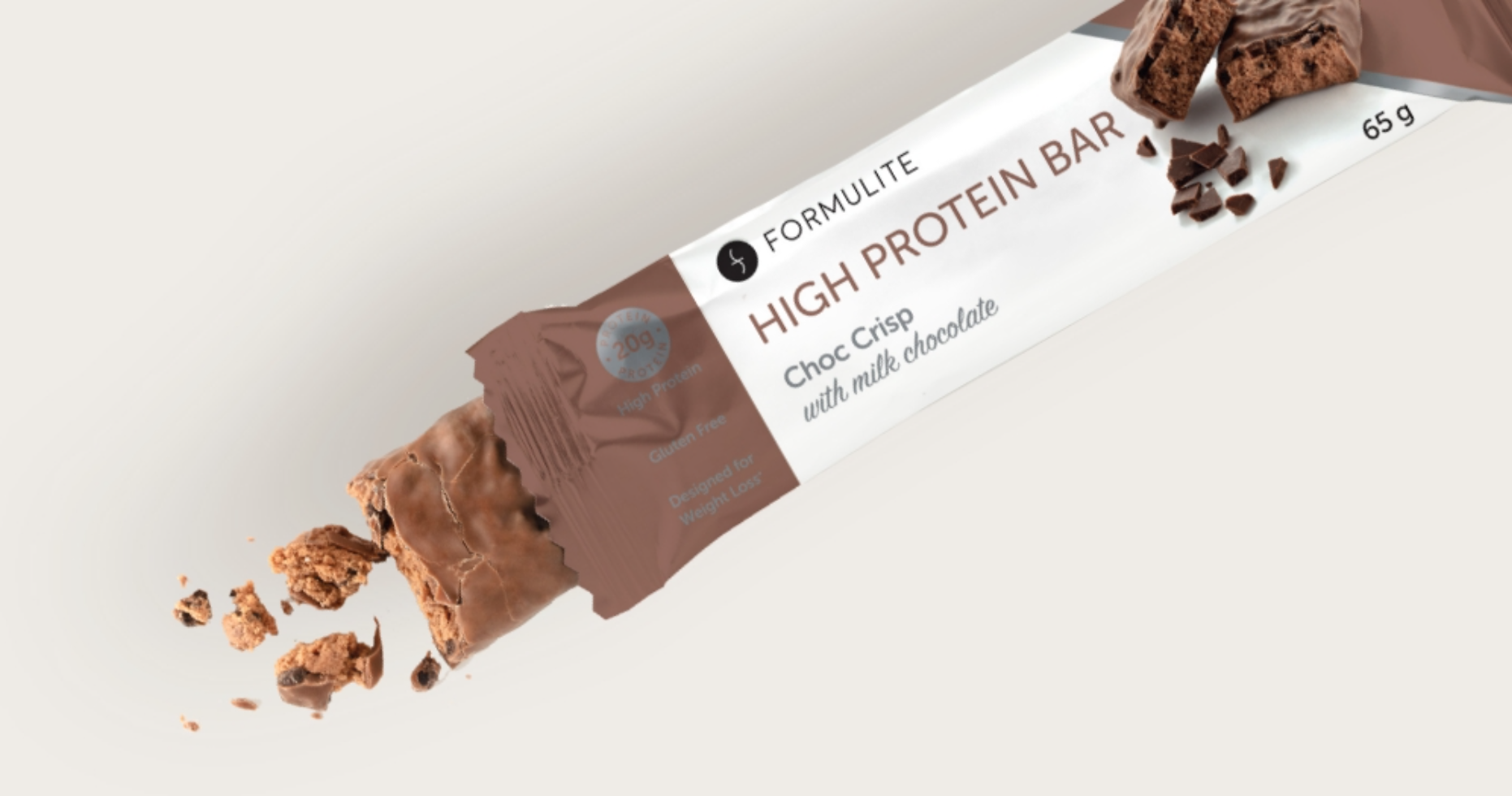
The Formulite Choc Crisp bar is a meal replacement bar, so it’s designed to stand in for a meal.
| Checklist item | Per 65 g bar |
|---|---|
| Protein | 20.0 g |
| Fibre | 5.6 g |
| Energy | 1,010 kJ (242 Cal) |
| Sugars | 10.0 g |
| Sugar alcohols | 3.3 g sorbitol, 5.1 g glycerol |
| Vitamins and minerals | 24 |
| Allergens | Contains milk and soy. May contain peanut, sesame and tree nuts |
| Gluten | Batch tested, nil detected |
| Cost per bar | About $6.08 (12-bar box) |
From the Choc Crisp nutrition panel. Cost per bar is based on the full retail price of $72.95 for a box of 12.
It’s not lactose-free (there’s about 2 g of lactose per bar), so keep that in mind if lactose is a problem for you.
You can eat the whole bar as a meal on the go, or split it into two snacks. It also comes in Lemon Coconut if white chocolate is more your thing.
Making Protein Bars Work for You
A good protein bar can come in handy. Here are a few ways to use them well:
- Keep one in your bag for days when lunch goes sideways.
- Pair a snack bar with a piece of fruit for a more filling afternoon pick-me-up.
- If you’re using a meal replacement bar instead of a meal, drink plenty of water with it.
And if you love bars and shakes, you can mix and match with our Bars + Shakes Bundle.
Choose a protein bar that suits you
The healthiest protein bar is the one that meets your nutritional needs and that has a label you’re happy with. Use the checklist, compare per serve, and don’t let the buzzwords on the front of the pack do all the talking.
Check out Formulite’s range of Protein Bars.
This article is general information only and isn’t a substitute for personalised advice. Talk to your healthcare professional before making big changes to your diet.